
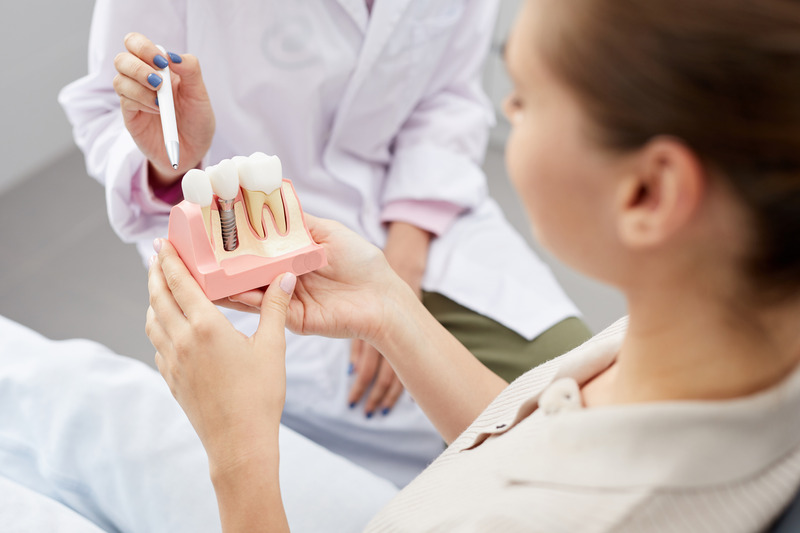
In ancient times, replacing a missing tooth meant using whatever you had—everything from ivory and animal bone to seashells. Fortunately, dental technology has advanced a lot through the ages, and now metal brings both durability and strength to prosthetics. But if dental implants are made with metal, won’t they rust? Not necessarily. Continue reading to learn how titanium changed the game for dental implants, and how you can take care of your new smile.
The Power of Titanium
In the mid-20th century, a Swedish orthopedic surgeon named Per-Ingvar Brånemark made a big discovery. While studying blood flow through bone in rabbits, he noticed that the titanium chambers he’d used had fused to their bones.
No other metal had done this before, so it was instantly both strange and exciting. He called the process osseointegration, and it became an important step for revolutionizing both medical prosthetics and dental implants.
Titanium is nearly perfect for the purpose of replacing human bone. It’s lightweight, incredibly strong, and—most importantly—biocompatible. That means your body won’t mistake it for a foreign object and try to reject it.
Rust vs. Corrosion: What’s the Difference?
Rust is a specific reaction that happens when iron is exposed to oxygen and moisture. Since titanium doesn’t contain iron, it can’t rust. However, sometimes it can experience a different kind of breakdown called corrosion.
Titanium forms a natural oxide layer on its surface that makes it highly resistant to corrosion, making it fairly uncommon. That said, it can still happen in certain conditions. High acidity in your mouth, medications that lower saliva pH, dry mouth, or even other metal dental restorations can slowly degrade your implant’s protective shield. The result can be surface pitting, microscopic material release, or, in exceedingly rare cases, implant failure.
Keeping Your Implants in Great Shape
Corrosion in dental implants is rare, especially in healthy patients who maintain good oral hygiene. Brushing, flossing, avoiding excessive acidic foods and drinks, and seeing your dentist regularly are the best defenses you have. If you ever notice discomfort, swelling, or unusual sensitivity around your implant, don’t ignore it—let your dentist take a look.
Dental implants have come a long way from carved bone and seashells. With the right care, they’re built to last a lifetime.
About the Author
Dr. David Nisenboym earned his Doctor of Dental Surgery from the University of the Pacific Dental School. He then completed a residency on the Pascua Yaqui reservation, gaining hands-on experience in dental implant placement. Today, Dr. Nisenboym combines specialized training with a commitment to personalized care, so your implants are built to last. Call (925) 934-3395 to schedule a dental implant consultation at Blue Wave Dental of Walnut Creek or visit our website to request an appointment online.